Why Physical Therapy Should Feel Like Training
Most people walk into physical therapy expecting to be treated like a patient.
That’s the problem.
You sit on a table. You get a printout. Maybe you do a few banded exercises, receive some manual therapy. You leave unsure if it relates to your goals, running faster, lifting more, riding longer, or simply moving pain-free.
That model isn’t built for athletes. It’s built for compliance.
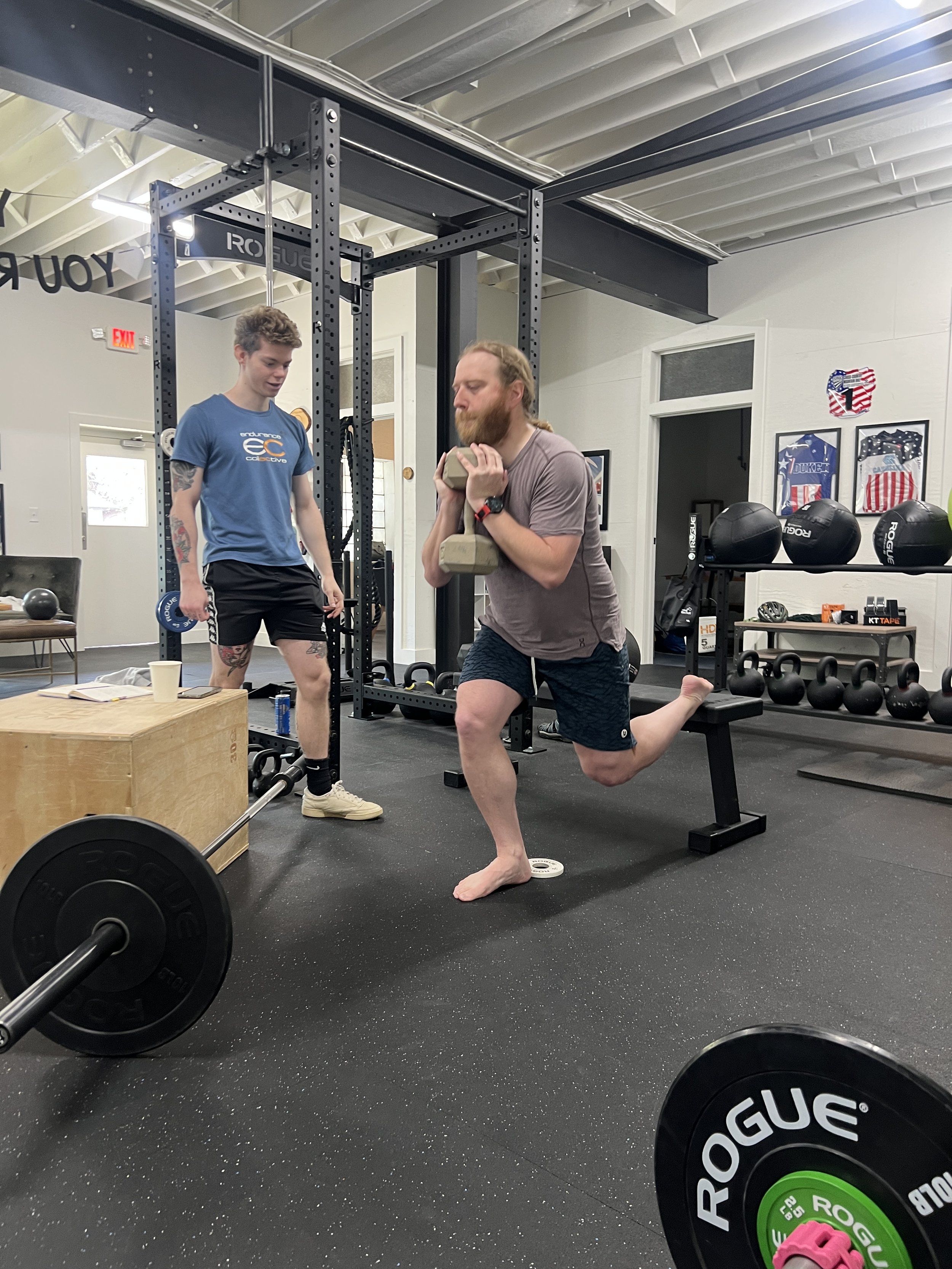
At The Endurance Collective, we take a different approach: physical therapy should feel like training, because that’s what it is.
Rehab is not separate from performance. It is performance.
If you zoom out, injury doesn’t happen in isolation. It happens in the context of load, stress, recovery, movement quality, and capacity. The same variables that drive performance are the ones that determine whether you break down or level up. Treating pain without addressing those variables is like trying to PR your squat without ever touching a barbell.
It doesn’t make sense.
That’s why your time in physical therapy should look a lot more like a training session than a medical appointment. You’re not there to be passively treated. You are there to build capacity. To load tissues intelligently. Identify weaknesses and address them.
That means progressive overload. That means specificity. That means intention.
Not three sets of ten forever.
In a performance-driven model, every exercise has a purpose that ties directly back to your sport or your goals. If you’re a runner, we’re not just strengthening your glutes. We are improving how you absorb force, produce force, and maintain efficiency under fatigue. If you are a cyclist, we’re not just “working on mobility”. We are addressing the positions and demands that show up on the bike.
Because context matters.
This is also why one-on-one care matters. You can’t build a real training plan if you’re splitting attention across three patients or following a protocol designed for insurance reimbursement instead of outcomes. At The Endurance Collective, sessions are built around the individual, not the system because performance doesn’t happen in a template.
Here is the part most people miss. Good physical therapy doesn’t just get you out of pain. It makes you harder to break.
If your rehab ends the moment your symptoms calm down, you’ve missed an opportunity. The goal isn’t just to return to your baseline. It’s to raise the ceiling. Strengthen the issues, facilitate better movement options, and create better resilience under load.
That’s training.
It also means education is part of the process. You should understand why you’re doing what you’re doing. You should leave sessions with clarity not confusion. When you understand principles like load management, recovery, and adaptation, you stop relying on appointments and start taking ownership of your progress.
That's when everything shifts.
The reality is, the line between rehab and training should be almost invisible. Prehab, recovery, mobility, and performance aren’t separate silos, they are all part of the same system. When you treat them that way, you don’t just fix injuries faster, you build a body that’s better prepared for whatever comes next.
So if your physical therapy feels passive, generic, or disconnected from your sport, it’s not you.
It’s the model.
And it’s time to expect more.