What Is Electrical Stimulation?
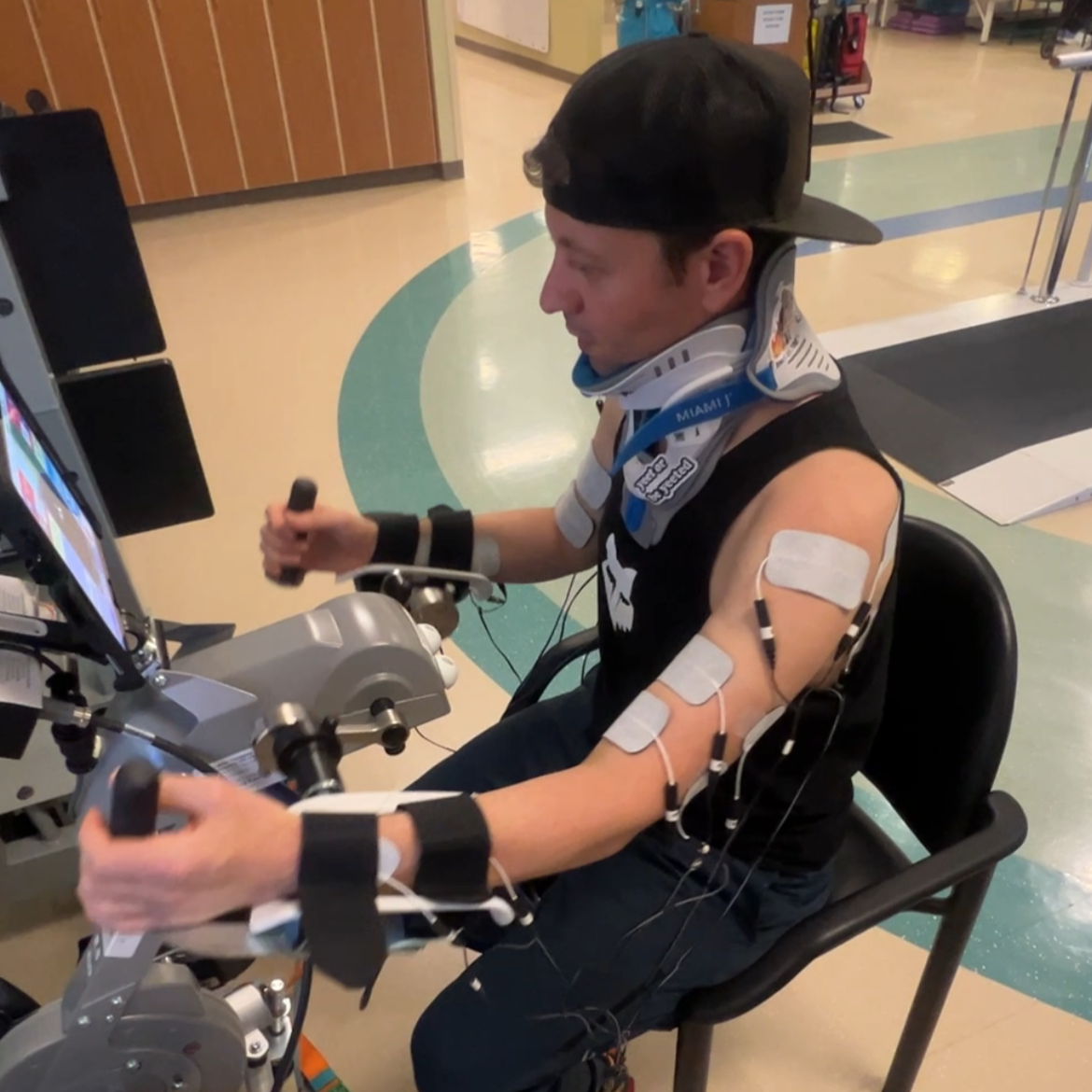
Most people have experienced electrical stimulation in rehab one of two ways.
Either it was slapped on them at the end of a session while they scrolled on their phone for ten minutes, or it was dismissed entirely as “passive treatment” that doesn’t actually help athletes get better. The truth is more nuanced than that. At The Endurance Collective, we care less about trends and more about tools that help athletes return to training, recover from injury, and perform at a higher level. Electrical stimulation can absolutely play a role in that process when it is used intentionally and paired with the right rehabilitation strategy. The key is understanding what it actually does, what it does not do, and where it fits into the bigger picture of recovery.
What Is Electrical Stimulation?
Electrical stimulation, often called e-stim or NMES (neuromuscular electrical stimulation), uses controlled electrical impulses to stimulate muscles or nerves through electrodes placed on the skin.
Depending on the settings and the goal, electrical stimulation can be used to:
Reduce pain
Improve muscle activation
Limit muscle atrophy after injury or surgery
Improve circulation
Help retrain movement patterns
Assist with swelling management
Not all electrical stimulation is the same. A TENS unit used for pain relief operates differently than NMES used to restore quadriceps strength after ACL surgery. The effectiveness depends entirely on matching the right intervention to the right athlete at the right stage of rehab.
Injury Changes More Than Just Tissue
One of the biggest misconceptions in rehab is that pain only exists at the site of injury. In reality, injury changes how the nervous system communicates with muscles. After surgery, trauma, or significant pain, the body often struggles to fully recruit certain muscles. A classic example is quadriceps inhibition after knee injury. Even when the muscle itself is structurally intact, the brain essentially downregulates its ability to contract efficiently. That matters because strength loss happens fast.
Research consistently shows that muscle atrophy and neural inhibition begin almost immediately after injury or immobilization. Athletes can lose significant strength within days, not weeks. If the nervous system cannot effectively activate the muscle, traditional strengthening exercises may not be enough early on.
This is where electrical stimulation becomes valuable.
By externally driving muscle contraction, NMES can help restore neuromuscular communication and improve muscle recruitment during the early stages of recovery. In other words, it helps remind the body how to use the muscle again.
Why It Works for Athletes
Athletes do not just need pain relief. They need capacity. They need to sprint, cut, climb, jump, ride, lift, absorb force, and repeat those movements under fatigue. Effective rehab has to rebuild the entire system, not simply calm symptoms. Electrical stimulation can support that process in several important ways.
Improving Muscle Activation
Following injury, athletes often struggle to fully engage muscles even when they are trying hard.
This is especially common with:
Quadriceps after ACL reconstruction
Calves after Achilles injury
Glutes after hip pain
Rotator cuff muscles after shoulder injury
Electrical stimulation can improve voluntary muscle activation by pairing external stimulation with intentional contractions. Over time, this can improve strength development and movement quality. For an athlete trying to return to running or lifting, regaining clean muscle recruitment matters.
Reducing Strength Loss During Recovery
Periods of reduced loading are unavoidable after many injuries. When athletes cannot fully train, the body starts adapting downward. Strength decreases. Power decreases. Tissue tolerance decreases. Electrical stimulation can help reduce the rate of muscle loss during these periods by creating muscular contractions even when full loading is not yet possible. This is especially valuable after surgery or during phases where pain limits training intensity. It is not a replacement for strength work. It is a bridge that helps maintain capacity until heavier loading becomes appropriate.
Pain Modulation
Pain changes movement. Athletes in pain compensate, guard, and avoid loading certain tissues. Sometimes that is appropriate. Often it becomes a barrier to recovery. Certain forms of electrical stimulation can help reduce pain sensitivity temporarily, allowing athletes to move with greater confidence and tolerance. That temporary reduction in pain can create an opportunity to actually train. And that matters because movement is often one of the most important parts of recovery. The goal is not to chase symptom relief forever. The goal is to create enough comfort to progressively restore function.
The Biggest Mistake in Rehab
Electrical stimulation becomes ineffective when it replaces active rehabilitation instead of supporting it. Lying on a table attached to a machine while doing nothing else is not high-performance rehab.
Athletes need:
Progressive strength training
Tendon loading
Plyometrics
Mobility work
Cardiovascular conditioning
Movement retraining
Sport-specific progression
Electrical stimulation is simply one tool within that larger framework. At The Endurance Collective, rehab is built around restoring performance, not just decreasing pain. That means every intervention has to answer one question:
Does this help the athlete move better, load better, and return to sport more effectively?
When electrical stimulation improves muscle recruitment, reduces inhibition, or allows better participation in training, it has value. When it becomes a substitute for actual rehab, it does not.
Rehab Should Feel Like Training
One reason many athletes become frustrated with traditional physical therapy is that it often feels disconnected from the demands of their sport.But the body adapts to stress. That is true in marathon training, strength training, and injury recovery alike.
Electrical stimulation works best when integrated into a broader performance-based system:
Stimulating the quad during loaded squats after knee surgery
Pairing calf activation with progressive plyometric work
Using pain modulation to improve running mechanics
Combining neuromuscular re-education with strength progression
The goal is always adaptation, not dependency. Athletes do not need endless treatment. They need strategic progression back to full capacity.
What the Research Actually Says
The research on electrical stimulation is strongest in areas like:
Post-operative muscle activation
Prevention of muscle atrophy
Quadriceps recovery after ACL reconstruction
Pain modulation
Neuromuscular retraining
Studies consistently show improved outcomes when NMES is combined with active exercise compared to exercise alone in certain rehab populations, especially early after injury or surgery. But context matters. No modality is universally effective for every injury, every athlete, or every phase of rehab. The best clinicians understand when to use it and when to move on. That is the difference between evidence-informed rehab and simply chasing gadgets.
The Bottom Line
Electrical stimulation is not magic. It will not heal an injury on its own. It will not replace strength training. It will not suddenly make an athlete resilient. But when used correctly, it can be an extremely effective tool for restoring muscle activation, reducing strength loss, managing pain, and helping athletes transition back into meaningful training sooner. At The Endurance Collective, we believe rehab should prepare you for the demands of sport, not just the absence of symptoms.
That means using every appropriate tool available, including electrical stimulation, within a system built around performance, adaptation, and long-term resilience. Because recovery is not about doing less forever. It is about rebuilding the ability to do more.
If you are dealing with an injury, post-operative weakness, persistent pain, or difficulty returning to training, schedule an evaluation with The Endurance Collective and start building a rehab plan designed for athletes who want to move forward, not just feel temporarily better.