
Do Enough Mobility to Do What You Love. Then Stop.
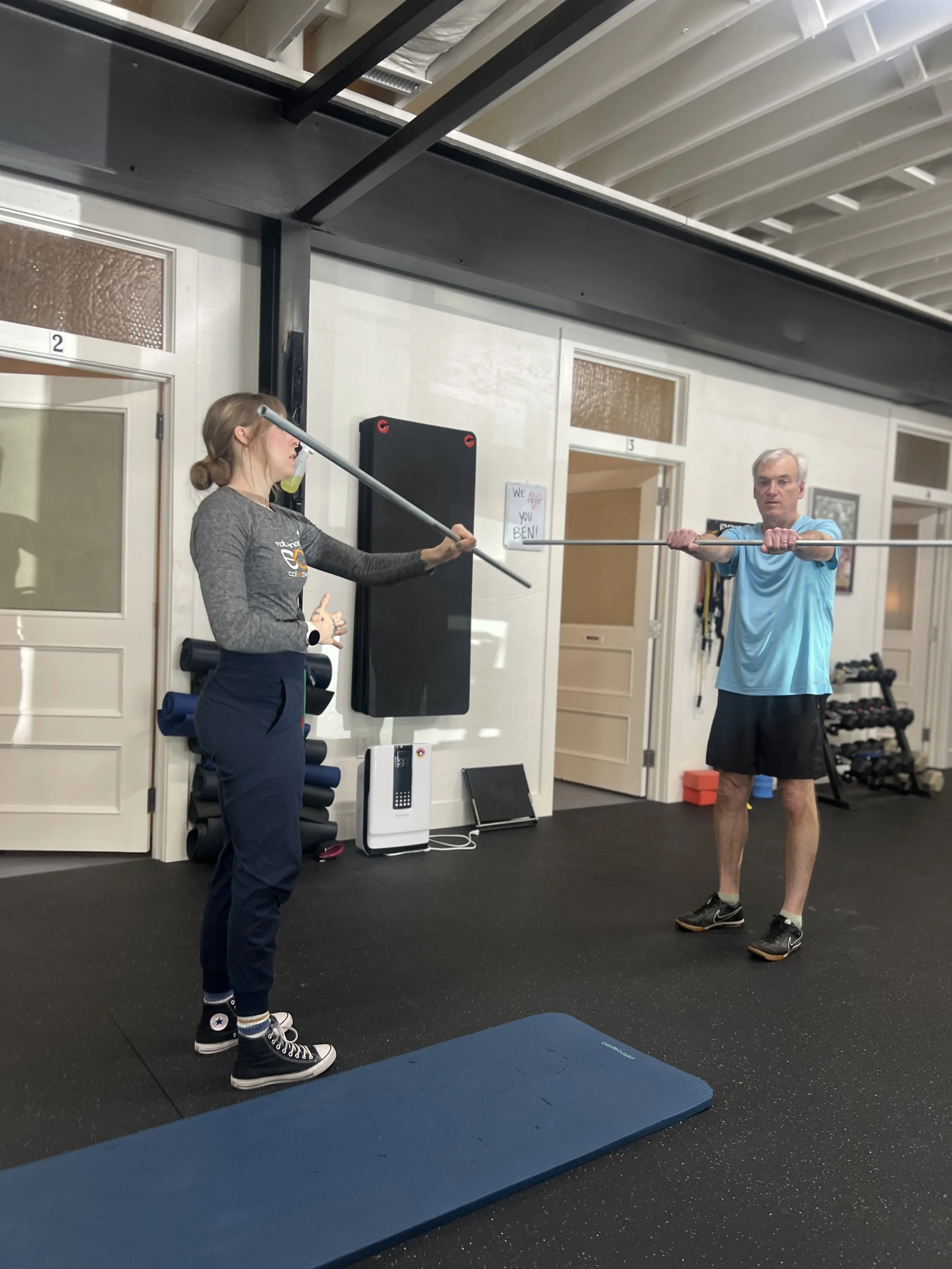
Mobility has become one of the most overprescribed interventions in fitness. Scroll through social media or walk into almost any gym and you'll find people spending twenty or thirty minutes stretching, foam rolling, banding joints, and performing elaborate mobility routines before they ever touch a barbell or lace up their running shoes. Somewhere along the way, mobility stopped being a tool and became the goal. The problem is that most athletes never stop to ask the most important question: Why am I trying to become more mobile?
At The Endurance Collective, we don't believe mobility should be treated like a badge of honor or another fitness metric to chase. We aren't trying to help you become the most flexible person in the room. We're trying to help you run farther, ride stronger, lift heavier, recover faster, and continue doing those things for years. Sometimes that requires improving mobility. Other times, it doesn't require any additional mobility at all.
Mobility is simply your ability to move through a range of motion with control. That's it. It isn't inherently good or bad, and more isn't automatically better. The right amount of mobility is whatever allows you to perform your sport or activity efficiently, comfortably, and without unnecessary compensation. If you're a cyclist who can comfortably stay in an aerodynamic position for hours without pain, you probably don't need to spend forty-five minutes every day trying to improve your hamstring flexibility. If you're a powerlifter consistently hitting depth and progressing your lifts, forcing yourself into another twenty degrees of hip rotation is unlikely to make you stronger. If you're a runner moving efficiently and pain-free, chasing extreme mobility because someone on Instagram says you should may accomplish absolutely nothing.
In fact, there comes a point where more mobility stops helping and may actually become a disadvantage. Athletic performance depends on a balance between mobility and stability. Tendons need stiffness to store and release energy. Muscles need stability to generate force efficiently. A sprinter's Achilles tendon is remarkably stiff for a reason. A cyclist relies on a stable trunk to transfer power into the pedals. A baseball pitcher doesn't throw ninety-five miles per hour because they have unlimited shoulder flexibility; they throw hard because they have the right amount of mobility combined with exceptional strength, timing, and control. Chasing endless flexibility without considering stability is like loosening every bolt on your bike because you think more movement must be better. At some point, you've sacrificed performance in pursuit of the wrong goal.
One of the biggest misconceptions we see in physical therapy is the belief that feeling tight automatically means something needs to be stretched. Tightness isn't always a sign that a muscle is short. Often, it's your nervous system creating tension because it doesn't feel stable. Tight hamstrings may actually reflect weak hips. Tight calves may be responding to overloaded running mechanics. Tight shoulders may be compensating for poor movement through your upper back. Stretching those tissues might make them feel better for a few minutes, but if the underlying problem is weakness, poor motor control, or excessive training load, you've simply treated the symptom instead of the cause. Sometimes the best mobility exercise isn't stretching at all—it's getting stronger.
The irony is that many athletes are already developing the mobility they need simply by participating in their sport. Squatting builds ankle and hip mobility under load. Swimming develops shoulder range of motion. Weightlifting improves mobility while reinforcing strength and control. Rock climbing demands tremendous thoracic and shoulder movement. Even running repeatedly loads the hips, knees, and ankles through thousands of repetitions every week. That doesn't mean mobility work has no place. It means that additional mobility should be targeted toward actual limitations, not performed endlessly because someone said every athlete needs more.
This is one of the biggest differences between individualized sports physical therapy and generic mobility programs. We don't hand every athlete the same stretching routine and hope something sticks. Instead, we ask better questions. What's actually limiting your performance? Is it joint mobility? Strength? Motor control? Training volume? Recovery? Technique? Sometimes an athlete truly does need more ankle mobility to squat well or more thoracic rotation to swim efficiently. But just as often, improving strength, refining movement mechanics, or adjusting training load produces far greater results than another thirty minutes of stretching ever could.
Social media has also created the illusion that there's a universal standard for perfect movement. Deep overhead squats, extreme hip rotations, full splits, and flawless toe touches have somehow become markers of athleticism. Yet if you spend time around elite athletes, you'll quickly realize they don't all move the same. Some world-class cyclists can't touch their toes. Some elite runners have average hip mobility. Some Olympic lifters have ankle mobility that would surprise you. What they all have is enough movement to excel in the demands of their sport. They don't waste energy chasing movement they don't need.
At The Endurance Collective, our goal is never to make you more mobile just for the sake of being more mobile. When someone tells us they feel tight, we don't automatically prescribe stretching. We figure out why they feel tight. We identify what's actually limiting performance, then prescribe the smallest effective dose to solve the problem. Sometimes that's five minutes of targeted mobility before training. Sometimes it's loaded mobility. Sometimes it's strength training. Sometimes it's modifying training volume or improving technique. The answer is different for every athlete because every athlete is different.
The reality is that time and energy are limited resources. Every extra minute spent chasing unnecessary mobility is a minute that could have been spent getting stronger, improving endurance, practicing your sport, or recovering for tomorrow's training session. Your body doesn't care how impressive your mobility routine looks on social media. It cares whether you can consistently tolerate the demands you place on it.
So here's our advice: do enough mobility to squat without pain. Do enough mobility to ride comfortably. Do enough mobility to reach overhead. Do enough mobility to play with your kids, hike with your family, finish your next marathon, or complete your next CrossFit workout. Once you can do the activities you love without unnecessary restriction, stop chasing more for the sake of more.
Mobility isn't the finish line. It's simply one tool that helps you get there.
If you're not sure whether mobility is actually your limiting factor, let us help. At The Endurance Collective, we evaluate movement in the context of your sport—not against arbitrary standards from social media. We'll identify what's truly holding you back and build a plan that helps you spend less time doing unnecessary exercises and more time doing what you love.