Before You Reach for the Graston Tool, Grab the Massage Gun
Walk into any gym, training facility, or race venue and you'll see athletes doing all sorts of things before they train. Bands. Mobility drills. Foam rollers. Lacrosse balls. Massage guns. Scraping tools. Some methods help, some make little difference, and others may even undermine your goals.
A recently published study in the Journal of Strength and Conditioning Research looked at two popular recovery and treatment tools—Instrument-Assisted Soft Tissue Mobilization (IASTM) and Percussion Massage Therapy (PMT)—to see how they affected performance immediately before activity in elite rowers.
The results are worth paying attention to.
What the Researchers Found
Researchers divided 45 elite rowers into three groups:
IASTM (the scraping tools often associated with Graston-style treatments)
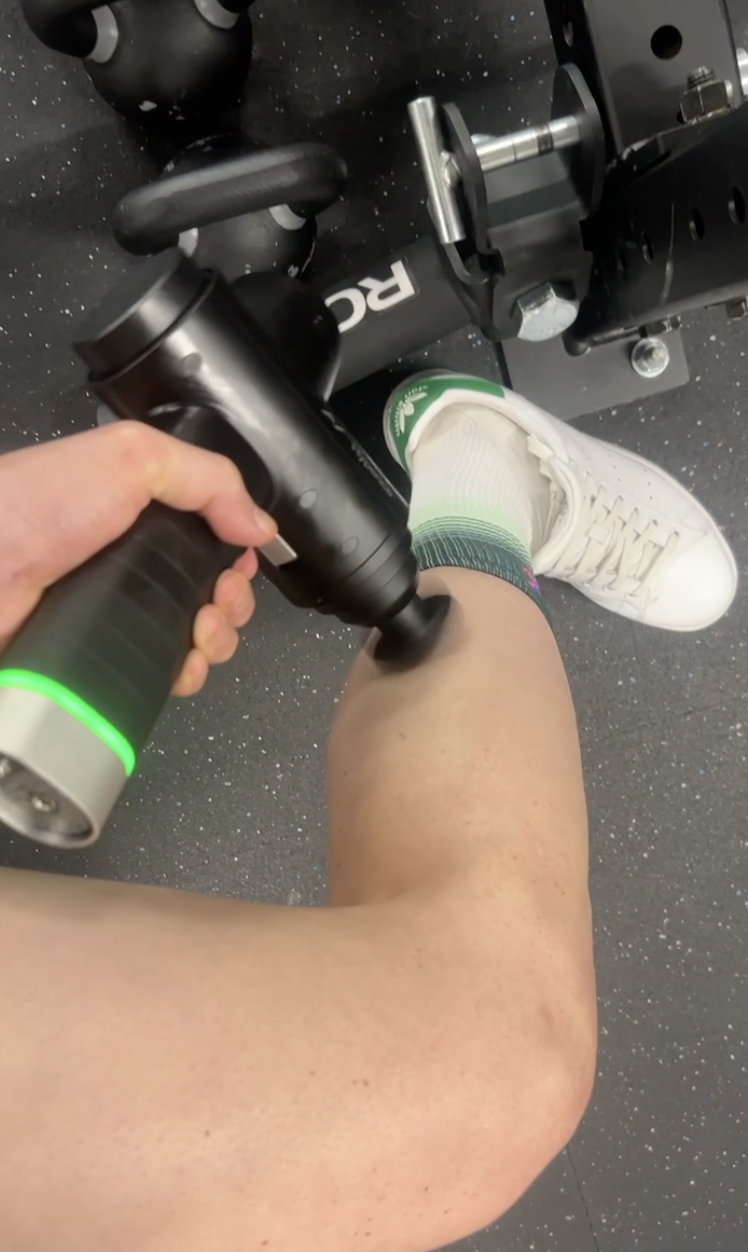
Percussion Massage Therapy (massage guns)
Control group
They then measured:
Dynamic balance
Explosive power
Quadriceps strength
Calf strength
Both the massage gun group and the IASTM group improved balance and showed gains in some measures of explosive performance.
But that's where the similarities ended. The massage gun group demonstrated significant increases in quadriceps and calf strength. The IASTM group actually showed reductions in muscle strength following treatment.
Read that again.
The athletes who received the scraping intervention jumped better and balanced better, but they produced less force afterward. The massage gun group improved across the board.
Why This Matters
At The Endurance Collective, we always ask a simple question:
What is the goal of the intervention?
Too often athletes get caught up in techniques, trends, and treatment methods without considering timing.An intervention that is helpful after training may not be the best choice before training. If you're about to head out for a hard track workout, a key long run, or a race, your goal isn't simply to "feel looser." Your goal is to be prepared to produce force. You need muscles and nervous systems that are ready to perform.
This study suggests that percussion massage may help create that readiness while IASTM may temporarily decrease the ability to generate force. For athletes, that's an important distinction.
Feeling Better Isn't Always Performing Better
One of the biggest mistakes athletes make is assuming that if something feels good, it must improve performance. That's not always true.
Aggressive soft tissue work often creates an immediate sensation of relief. Athletes describe feeling looser, more mobile, or less restricted. But performance isn't determined by how loose you feel. Performance is determined by how effectively your body can create force, absorb force, coordinate movement, and manage fatigue.
If a treatment improves mobility but temporarily reduces strength output, it may not be the best option immediately before a workout or competition. The goal of a warm-up isn't relaxation. The goal is readiness.
What We Tell Our Athletes
Does this mean IASTM is bad?
Not at all.
IASTM can be a valuable tool when used appropriately. We use it selectively in physical therapy when it fits the athlete, the injury, and the overall plan of care. But timing matters. Just because a treatment works doesn't mean it should be used right before performance.
The same principle applies to stretching, massage, mobility drills, and recovery modalities. The question isn't whether a tool is good or bad. The question is whether it moves you closer to the outcome you're trying to achieve in that moment.
The Endurance Collective Takeaway
If you're looking for a quick pre-workout intervention to help you feel prepared, a massage gun may be a better choice than aggressive scraping or soft tissue mobilization.
The research suggests percussion therapy can improve balance, enhance explosive performance, and increase muscle strength immediately afterward.
For athletes trying to maximize performance, that's a compelling combination.More importantly, this study reinforces a principle we emphasize every day:
Treatments should support performance, not simply create sensations.
The best intervention isn't the one that feels the most intense. It's the one that helps you train better, recover better, and perform better. And sometimes that means putting down the metal tool and picking up the massage gun.
Ready to Train Smarter?
At The Endurance Collective, we help endurance athletes understand not just what works, but when it works. Whether you're dealing with an injury, preparing for a goal race, or trying to optimize performance, our physical therapy, sports massage, and performance services are designed to keep you moving forward.
Book an appointment today and let's build a plan that helps every treatment serve a purpose.