
Why We Don't Reach for Ice Anymore
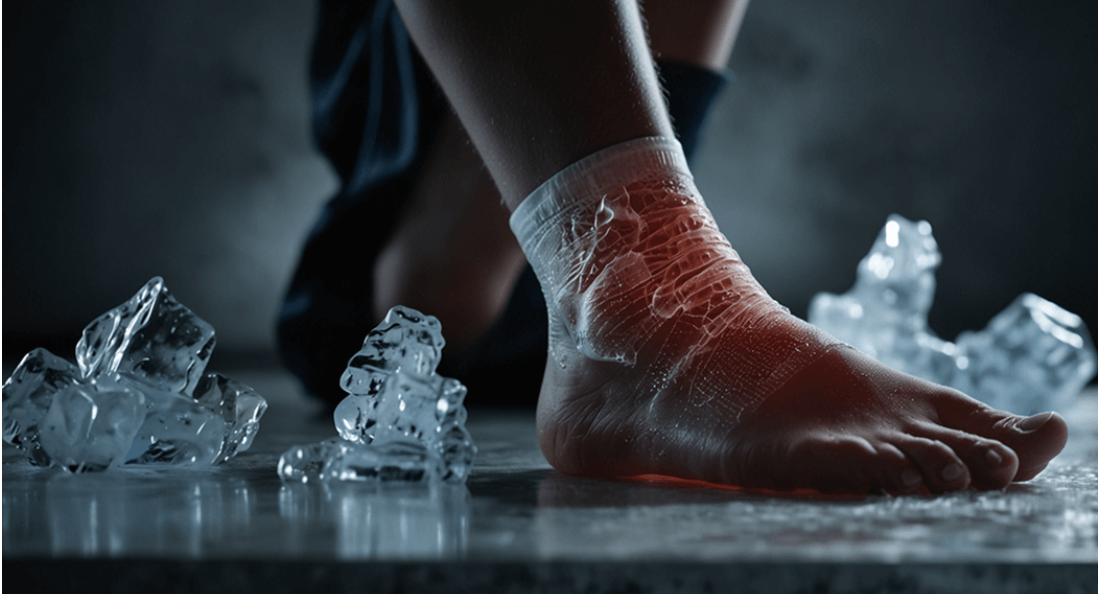
For decades, the advice after an injury was simple: RICE. It became so ingrained in sports culture that few people ever stopped to ask whether it was actually helping.
The surprising answer? We now know that many of the things athletes were taught about injury recovery are incomplete at best and, in some cases, may actually slow the healing process.
The Rise and Fall of RICE
The RICE protocol was introduced in 1978 by physician Dr. Gabe Mirkin and quickly became the standard recommendation for acute injuries. Coaches, athletic trainers, healthcare providers, and athletes all adopted it. The logic seemed straightforward. Injuries create inflammation. Inflammation causes pain and swelling. Therefore, reducing inflammation must speed recovery.
But there was one problem: the science never fully supported that assumption.
As research evolved, we learned that inflammation isn't simply a problem to eliminate. It's one of the body's primary healing mechanisms. In fact, in 2014, Dr. Mirkin publicly acknowledged that ice and complete rest may delay healing by interfering with the body's natural recovery processes. That's a pretty remarkable statement coming from the person who created RICE in the first place.
Healing Isn't the Absence of Inflammation
When tissue is injured, your body immediately begins a coordinated repair process. Blood flow increases. Immune cells arrive. Chemical signals are released. New tissue begins forming.
This inflammatory response is not a mistake. It's the first phase of healing. While excessive swelling can certainly create problems, completely shutting down inflammation may interfere with the very process your body is using to repair itself.
This doesn't mean ice is always bad or that inflammation is always good. It means the goal shouldn't be to eliminate inflammation at all costs. The goal should be to support recovery. And that's where modern rehabilitation has shifted its focus.
Enter PEACE & LOVE
In 2019, researchers proposed a new framework for managing soft tissue injuries: PEACE & LOVE.
Unlike RICE, which focused heavily on rest and symptom reduction, PEACE & LOVE recognizes that healing is both a biological and behavioral process.
PEACE: The First Few Days
For acute injuries, the recommendation is PEACE:
Protect
Reduce activities that aggravate symptoms, but avoid complete immobilization unless absolutely necessary.
Elevate
Manage swelling through positioning when appropriate.
Avoid Anti-Inflammatories
Inflammation is part of the healing process. Suppressing it may interfere with tissue repair.
Compress
Use compression to help manage excessive swelling.
Educate
Perhaps the most important piece. Recovery isn't about finding the perfect passive treatment. It's about understanding the healing process and actively participating in it.
LOVE: The Recovery Process
After the initial injury response settles, recovery shifts to LOVE:
Load
Appropriately loading tissues helps guide adaptation and repair.
Optimism
Your beliefs about your injury matter. Fear, catastrophizing, and avoidance can significantly affect outcomes.
Vascularization
Early aerobic exercise helps improve circulation and supports recovery.
Exercise
Progressive exercise restores strength, mobility, coordination, capacity, and confidence.
This framework reflects what we see every day at The Endurance Collective.
Athletes rarely get better because they rested perfectly.
They get better because they progressively returned to doing meaningful work.
Your Body Adapts to What You Ask It to Do
One of the foundational principles of sports medicine is that tissues adapt to load. Muscles get stronger because we challenge them. Tendons become more resilient because we expose them to stress. Bones remodel because they experience force. The same principle applies during rehabilitation.
When we remove all stress from a healing tissue for too long, we remove the stimulus that drives adaptation. The key isn't avoiding load. The key is finding the right amount of load at the right time. That's where individualized rehabilitation becomes critical.
Too much too soon can be problematic. Too little for too long can be just as limiting. The sweet spot lies somewhere in between.
What This Means for Athletes
If you're injured, don't panic if someone doesn't immediately hand you an ice pack. Modern sports medicine has moved beyond the idea that recovery means sitting still and waiting. Recovery is active. Recovery is progressive. Recovery is a process of restoring capacity, not simply reducing symptoms.
At The Endurance Collective, our goal isn't just to help pain go away. Our goal is to help athletes return to doing the things they love with more confidence, more resilience, and a better understanding of their bodies.
Because healing isn't about shutting the body down. It's about helping it adapt. And adaptation has always been the foundation of performance.
Ready to Get Back to Training?
Whether you're dealing with a recent injury, a nagging issue that won't go away, or trying to figure out how to safely return to your sport, our team can help.
Schedule a physical therapy evaluation with The Endurance Collective and build a recovery plan that moves you forward—not one that leaves you sitting on the sidelines.