Rehab Is Training in the Presence of Injury: Why Physical Therapy at The Endurance Collective Looks Different
If you've ever been injured, you've probably heard the same advice: stop running, take a few weeks off, do these three exercises, and come back if it still hurts. For athletes, that approach can be frustrating. More importantly, it often fails to address the reality of training and recovery. At The Endurance Collective, we believe rehabilitation should look different. Rehab is training in the presence of injury. It isn't a break from training. It is training—with a different objective. The goal isn't simply to make pain disappear. It's to build a stronger, more capable, and more resilient athlete than the one who got injured in the first place.
Injury Doesn't Mean Your Training Stops
One of the biggest mistakes in sports medicine is treating injury like an on-off switch. You're either training or you're resting. In reality, adaptation doesn't stop because something hurts. Training load still matters. Sleep still matters. Nutrition still matters. Strength, movement quality, recovery, and stress all continue to influence how your body responds to training. The question isn't always whether you should train. The better question is: How do we train while respecting the injured tissue?
That's one of the most important questions sports physical therapy should answer. An injury may require you to change how you're training, but it doesn't necessarily mean you need to stop moving altogether. Running may become shorter or slower. Cycling intensity may change. Strength training may be modified. Plyometrics might be temporarily reduced or reintroduced gradually. The goal is to find the appropriate level of stress that allows your body to heal while continuing to build capacity.
Physical Therapy Should Feel Like Coaching
Traditional physical therapy can sometimes separate rehabilitation from performance. Patients are given a sheet of exercises, told to complete three sets of ten, and eventually discharged when their pain improves. For some people, that may be enough. For athletes, it often isn't.
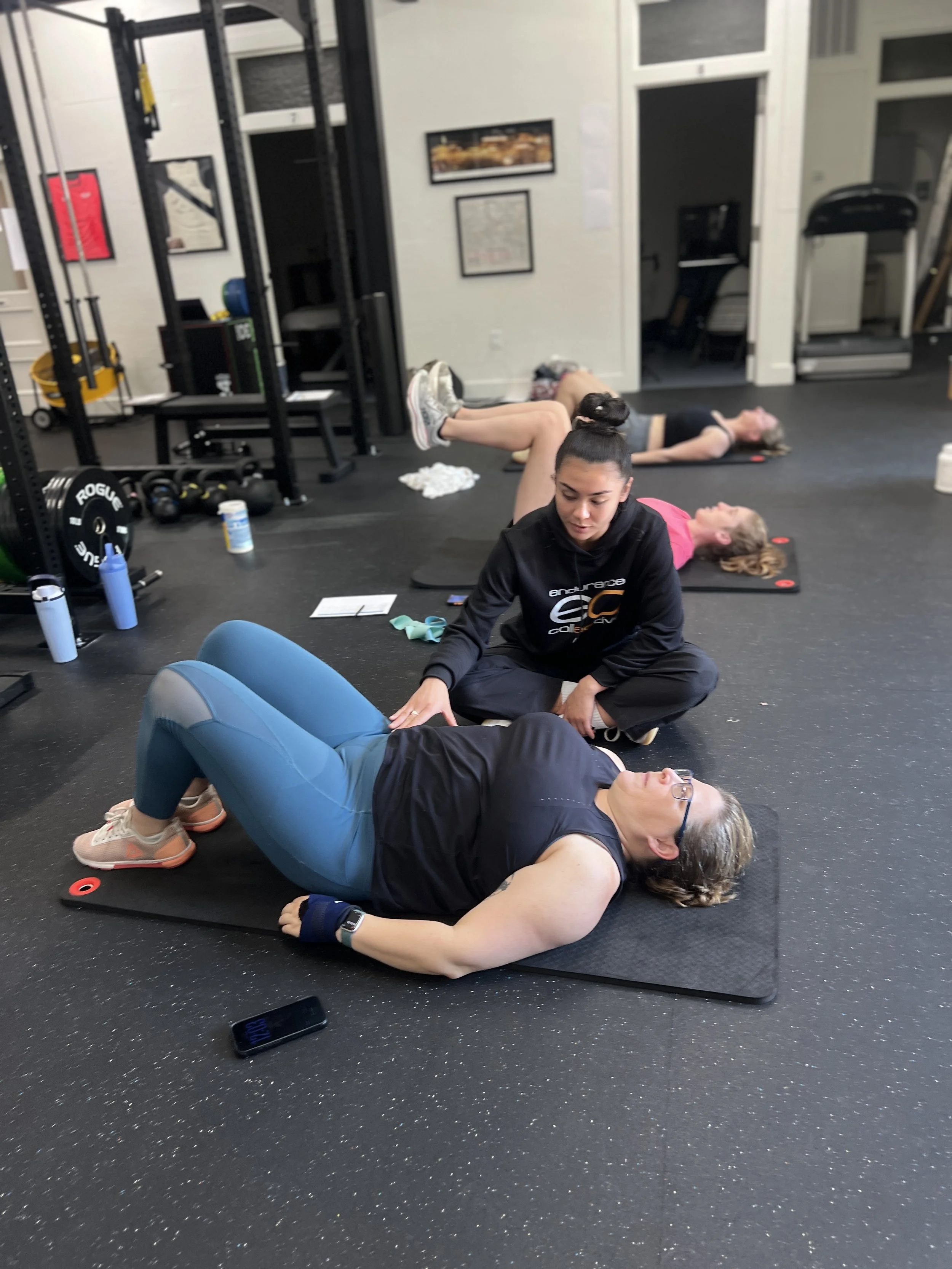
At The Endurance Collective, we approach rehabilitation more like training. Every exercise has a purpose. Every progression is connected to a specific goal. Every phase builds on what came before it. We aren't interested in simply checking boxes or getting you through a predetermined protocol. We're interested in understanding what you need to do, where your current capacity is, and how to progressively close the gap between the two.
That means your physical therapy should reflect your actual life and your actual sport. If you're a runner, your rehabilitation should eventually prepare you to run. If you're a cyclist, it should prepare you for the demands of riding. If you're a triathlete, your rehab needs to account for swimming, cycling, running, and the cumulative stress of combining them. Physical therapy should prepare you for the activities you care about—not simply for the absence of symptoms.
Pain Isn't the Enemy
Pain is information, not a training program. Understanding that distinction is important.
Pain doesn't always mean that you are causing damage, and the presence of some discomfort doesn't automatically mean you need to stop. At the same time, ignoring pain and pushing through everything isn't a thoughtful rehabilitation strategy either. The goal is to understand how your symptoms respond to different amounts and types of loading and use that information to guide your training.
Appropriately loading injured tissue is an important part of rehabilitation. Tendons respond to progressive loading. Muscles regain strength and capacity through resistance training. Bones adapt to mechanical stress. Connective tissues respond to changes in mechanical demand. The body is built to adapt, but adaptation requires an appropriate stimulus.
That is where good physical therapy lives: between doing too much and doing too little. The goal is not to eliminate every sensation before you move again. The goal is to understand what your body can tolerate today, provide the right stimulus, and progressively increase what it can handle tomorrow.
Load Is the Treatment
If exercise is medicine, then load is the dosage.
Too much load can overwhelm the body's current capacity. Too little load may fail to create the stimulus necessary for adaptation. The role of a sports physical therapist isn't simply to prescribe exercises. It's to determine how much stress your body can handle, how it responds to that stress, and how to progressively increase the demand over time.
That might mean modifying your running volume, cycling intensity, strength training, hill work, speed sessions, or recovery strategies. Sometimes the right answer is temporarily doing less. Sometimes it's doing something different. Sometimes it's continuing to do almost exactly what you were doing, but with a more intentional progression.
You're rarely being told to stop doing everything. Instead, you're learning how to keep moving while respecting the injury and building back toward the demands of your sport.
We Treat Athletes, Not Injuries
A diagnosis can tell us where symptoms are occurring. It doesn't necessarily tell us why they developed.
Achilles tendinopathy, runner's knee, plantar fasciitis, hamstring strains, and other common sports injuries don't exist in isolation. They often develop when the demands placed on the body exceed its current capacity. That relationship can be influenced by training load, recovery, strength, movement mechanics, life stress, sleep, previous injuries, and a host of other factors.
Our job isn't simply to quiet the symptoms. It's to understand the bigger picture.
What have you been training for? How quickly did your training change? What does your recovery look like? What demands does your sport place on your body? Where are the gaps in your current strength or capacity? What does your schedule actually allow?
Those questions matter because the goal isn't just to get you out of pain. It's to increase your capacity so you are better prepared for the demands that caused the problem in the first place.
Rehab Should Improve Performance
The best rehabilitation programs don't simply return athletes to their previous baseline. They create an opportunity to improve.
Rehabilitation can make you stronger. It can improve movement efficiency. It can expose weaknesses that weren't being addressed in your normal training. It can teach you how to better manage training load and recognize the warning signs that your body is struggling to keep up with demand.
Injury can be frustrating, but it can also provide an opportunity to pay attention to parts of your training that may have been overlooked. The goal isn't to make your rehabilitation a detour from your athletic development. Rehab should be part of your athletic development.
Return to Sport Isn't the Finish Line
Being able to walk without pain isn't the same thing as being ready to return to your sport.
Endurance athletes don't train for the ability to complete a pain-free walk around the neighborhood. They train for long runs, hard rides, steep climbs, technical descents, race-day intensity, and the cumulative fatigue of high-volume training.
So those are the questions your rehabilitation should eventually answer.
Can you tolerate back-to-back long runs? Can you handle technical terrain? Can you sprint at the end of a race when you're fatigued? Can you lift heavy without compensating? Can you handle a high-volume training block? Can you recover from one demanding session before the next one?
Those are performance questions, not simply medical questions. Your rehabilitation should prepare you for them.
Why Physical Therapy at The Endurance Collective Looks Different
At The Endurance Collective, we don't separate rehabilitation from performance. We combine them.
Our approach to sports physical therapy is built around the individual athlete—not just the diagnosis. We consider your training history, goals, sport, biomechanics, strength, recovery, lifestyle, and overall workload when developing your plan.
Whether you're training for your first 5K, trying to qualify for Boston, preparing for an Ironman, chasing an ultra finish, riding mountain bikes, or simply trying to stay active without pain, your rehabilitation should support what you want to do. It shouldn't unnecessarily interrupt it.
That's why our physical therapy plans are individualized and progressive. We aren't following a generic timeline simply because that's what a protocol says. We're looking at how you are responding to training and adjusting the plan as your capacity changes.
The Bottom Line
Injury doesn't mean your identity as an athlete disappears. It means your training may need to change for a while.
The best rehabilitation isn't passive. It isn't endless stretching, waiting for pain to disappear, or completing a collection of exercises without understanding why you're doing them.
Rehabilitation is training in the presence of injury.
It's intelligent, progressive training performed with a clear understanding of your current capacity and the demands you ultimately want to meet. It's training with a new objective. Training with intention. Training that prepares you for everything that comes next.
At The Endurance Collective, we believe the goal of physical therapy isn't simply to get you back to where you were. It's to help you build the strength, capacity, confidence, and resilience to keep doing the things that matter to you.
Ready to train through injury instead of simply waiting it out?
The sports massage and physical therapists at The Endurance Collective work with runners, cyclists, triathletes, mountain bikers, and active adults throughout Durham, NC and beyond. If you're looking for sports massage and physical therapy in Durham, NC, schedule an evaluation and discover what rehabilitation looks like when it's treated as training.